
Why CVT Cars Feel Different When Driving
Published on 03 April 2026
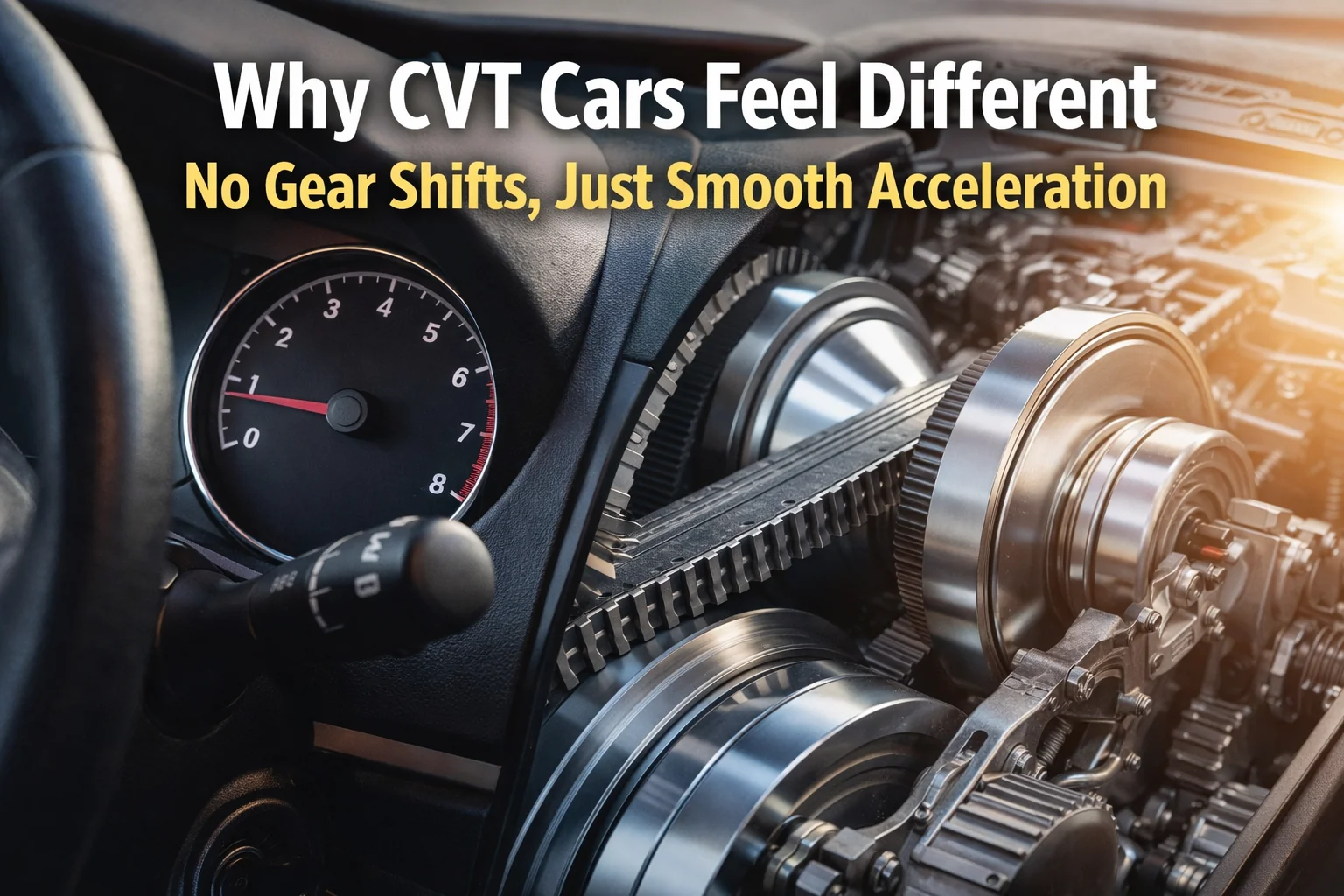
Continuously Variable Transmission (CVT) vehicles often feel different compared to traditional automatic or manual cars. Drivers may notice the absence of distinct gear shifts and a smoother, more constant engine sound. This unique driving experience is not a flaw but a result of how CVT technology is designed to operate. Understanding this system helps explain why CVT cars behave differently and what advantages they offer.
What is a CVT Transmission?
A CVT is a type of automatic transmission that does not rely on fixed gear ratios. Instead of shifting between gears, it uses a system of pulleys connected by a belt or chain to provide an infinite range of gear ratios.
This allows the engine to operate at its most efficient speed while the vehicle accelerates smoothly, without the interruptions typically associated with gear changes.
How CVT Works
Belt and Pulley System
The core of a CVT system consists of two variable-diameter pulleys connected by a belt. As the pulleys adjust their size, they change the gear ratio continuously.
- When accelerating, the system adjusts to provide more power
- When cruising, it optimizes for fuel efficiency
This seamless adjustment eliminates the need for traditional gear steps such as “1, 2, 3,” creating a smooth driving experience.
Why CVT Feels Different
No Gear Shifts
Unlike conventional transmissions, CVTs do not produce noticeable gear changes. This can feel unusual for drivers accustomed to the shifting sensation of standard automatics.
Constant Engine Sound
In a CVT, the engine often maintains a steady RPM while the car accelerates. This can create the impression that the engine is not responding immediately, even though the vehicle is gaining speed.
Smooth Acceleration
The absence of gear shifts results in uninterrupted acceleration, which many drivers find comfortable, especially in city driving conditions.
Advantages of CVT Vehicles
Improved Fuel Efficiency
CVTs keep the engine operating at optimal efficiency, which often results in lower fuel consumption compared to traditional transmissions.
Smoother Driving Experience
The continuous power delivery eliminates jerks and sudden shifts, making the ride more comfortable.
Simplicity of Operation
Without complex gear sets, CVTs can offer a simpler mechanical design, although they require specialized maintenance.
Limitations of CVT
Driving Feel
Some drivers may find the lack of gear shifts less engaging, particularly those who prefer a more responsive or performance-oriented driving experience.
Maintenance Considerations
CVTs require specific transmission fluids and proper servicing. Neglecting maintenance can lead to costly repairs.
Power Handling
In some cases, CVTs may not perform as well in high-performance or heavy-duty applications compared to traditional automatic transmissions.
Is a CVT Right for You?
CVT vehicles are particularly suitable for urban driving, daily commuting, and drivers who prioritize comfort and fuel efficiency. However, those seeking a more dynamic driving experience may prefer traditional automatic or manual transmissions.
Conclusion
CVT cars feel different because they eliminate fixed gear shifts and rely on a continuous adjustment system. This results in smoother acceleration and improved efficiency but also creates a driving sensation that may take time to get used to. Understanding how CVTs function helps drivers appreciate their benefits and make informed decisions when choosing a vehicle.